The visual examination of wine is a fundamental part of tasting, allowing us to appreciate not only the organoleptic characteristics of the beverage, but also to assess elements such as its quality and age. By looking carefully at the wine, it is possible to pick up numerous clues that help us understand what is in the glass, from the type of grape used to the maturity of the product. When carrying out the visual analysis of a wine, it is important to observe its colour, clarity, effervescence and consistency. These elements provide us with important information about the wine. For example, a young wine will have brighter, more intense colours, while a more mature wine will have subtler, more evolved shades.
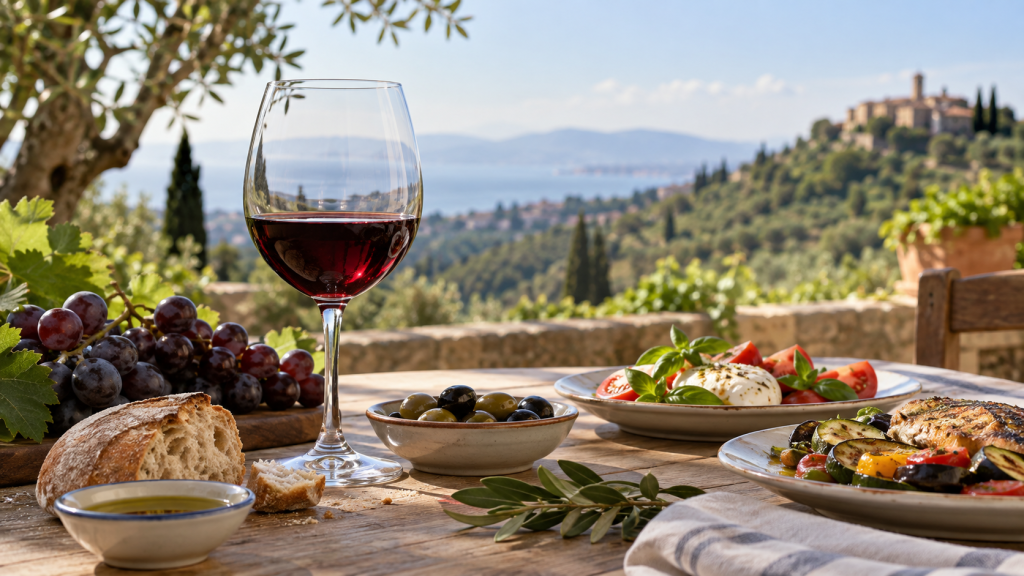
The colour of wine can vary depending on the type and the winemaking techniques used. For example, red wines can be ruby red, garnet, violet or orange, while white wines can be straw yellow, golden, amber or so pale that they appear almost transparent. Every shade of colour tells us something about the wine’s origin, the place and climate in which it was produced. The clarity of wine is another important aspect to assess during the visual examination. A wine that appears cloudy may indicate a production or storage defect, whereas a crystalline, transparent wine is a sign of proper winemaking and optimal storage.
In addition to colour and clarity, during the visual examination of wine it is also possible to observe the consistency of the liquid and the residual drops that run down the sides of the glass. The consistency of wine can be fluid, viscous or oily, while the residual drops provide us with information about the alcohol concentration and the presence of residual sugars. It is assessed by swirling the glass, the well-known gesture performed during wine tasting. During the visual analysis, it is important to observe the density of the tears that form on the sides of the glass when the wine is swirled. The so-called wine “legs” provide us with information about the viscosity of the liquid and its structure, enabling us to assess its complexity and aromatic persistence. During wine tasting, it is also important to assess its effervescence, namely the development of bubbles, the perlage, after opening the bottle. By observing this aspect, it is possible to understand the product’s pressure and serving temperature, as well as the amount of carbon dioxide it contains. From this, it is possible to determine whether one will be tasting a still, semi-sparkling or sparkling wine.
In conclusion, the visual examination of wine is a true sensory journey that allows us to appreciate the beauty and complexity of this ancient beverage. Looking carefully at a glass of wine is not merely a gesture of courtesy towards the producer and the sommelier who offered it to us, but also a way to discover new nuances and aromas that would otherwise have remained hidden from our eyes. Wine is a whole made up of form and substance, appearance and flavour, emotions and memories. Every drop of wine tells a different story, of a different territory, of a different tradition. And it is precisely through the visual examination of wine that we can immerse ourselves in these ancient stories, savouring with our eyes and palate the wonders of a world that never ceases to amaze us.