Biodiversity in the vineyard
The insects that inhabit the vineyard can be allies or enemies of the vine and vineyard biodiversity. Some of them play an important role, enabling the protection and reproduction of plants and the consequent development of fruit. However, other insects, known as vine pests, can cause significant damage to plants and their yields.
Among the most common vineyard insects known as vine pests are the European grapevine moth (Lobesia botrana) and the vine mealybug (Planococcus ficus). These insects feed on plant sap, weakening the plants and compromising their health. Following their attacks, plants may show leaf deformities, flower and fruit drop, a general loss of vigour and increased susceptibility to other diseases. In particular, the European grapevine moth attacks grape varieties with thin skins and compact bunches, and appears as a butterfly with brown wings measuring around 12 millimetres. Some insects are considered enemies of the vine because they feed directly on the fruit, such as Drosophila Suzukii. This insect, native to Asia, has become a significant problem for farmers in many countries in recent years. Drosophila Suzukii lays its eggs inside ripe fruit, causing it to rot.
How to protect the vineyard

To protect vines from pests and minimise the damage they cause, farmers often resort to using pesticides and plant protection treatments. Pesticides are chemical substances used to eliminate harmful insects, through both organic and non-organic plant protection treatments; methods such as pheromones and the adoption of specific agronomic practices help reduce pest activity. However, the indiscriminate use of pesticides can have negative effects on the surrounding environment. These chemicals can contaminate soil and water, damaging the local ecosystem. In addition, insects that are allies of the vine and the organisms that feed on them, such as birds and mammals, can suffer collateral damage as a result of these practices.
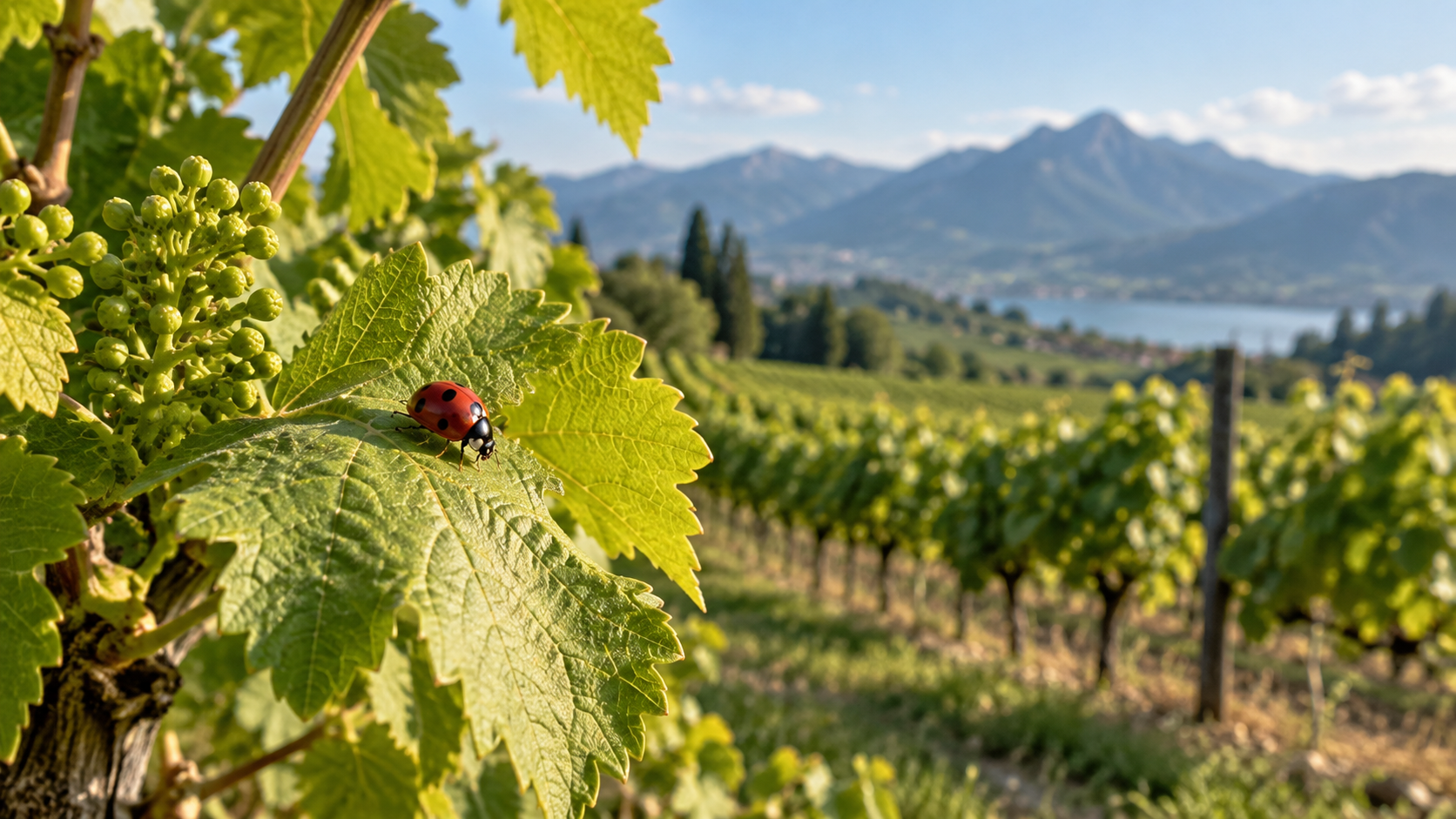
It is therefore important to adopt a balanced approach to the use of pesticides and plant protection treatments, seeking to reduce their use to the bare minimum and to use organic or low-environmental-impact products whenever possible. Biological control involves introducing predatory insects that feed on vine pests, helping to keep their population under control without the use of treatments. One insect that can be considered an ally of the vine is the ladybird. These small insects, with their characteristic red and black colouring, feed on aphids and other pests found on the plant. Their presence helps keep pest populations under control, preventing damage. Be aware that not all ladybird species should be considered allies; it is necessary to check that they are not harmful to the grape variety, such as Harmonia axyridis which is able to cling to the grapes during the harvest period, altering the characteristics of the future wine.
The vineyard ecosystem
The vineyard ecosystem is home to various insects that can be considered both friends and enemies of the vine. It is important to adopt agronomic practices and control methods that reduce the use of pesticides and plant protection treatments, favouring the use of organic products instead. It is essential to preserve and promote the presence of allied insects, such as those belonging to the Miridae or Chrysopidae families, which play an essential role in controlling vine pests. Only in this way can the health of the plants, the quality of the fruit and the sustainability of the surrounding environment be ensured.

Further reading
Other topics related to vineyard care: the awakening of nature in the vineyard, organic, biodynamic or natural wine, climate change.