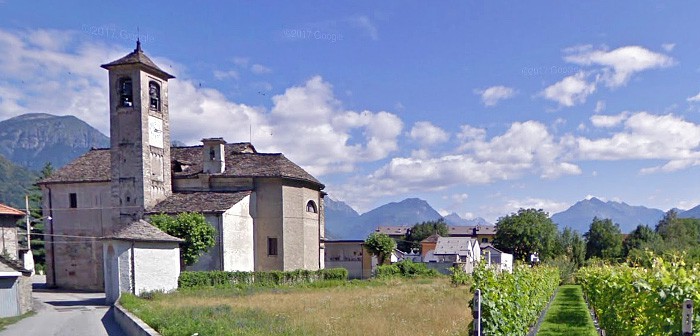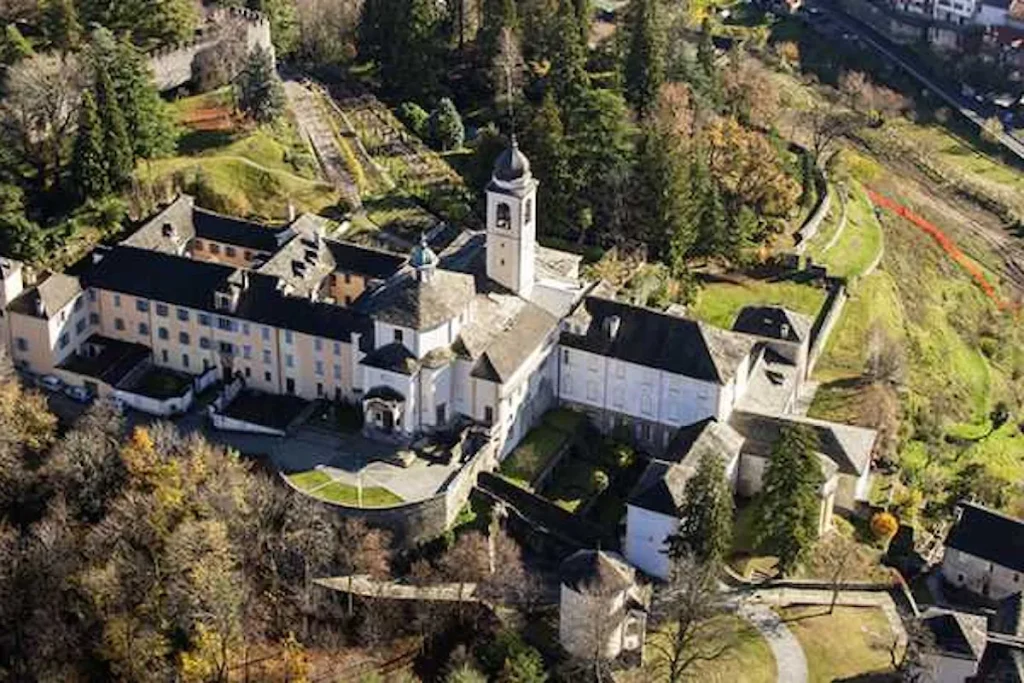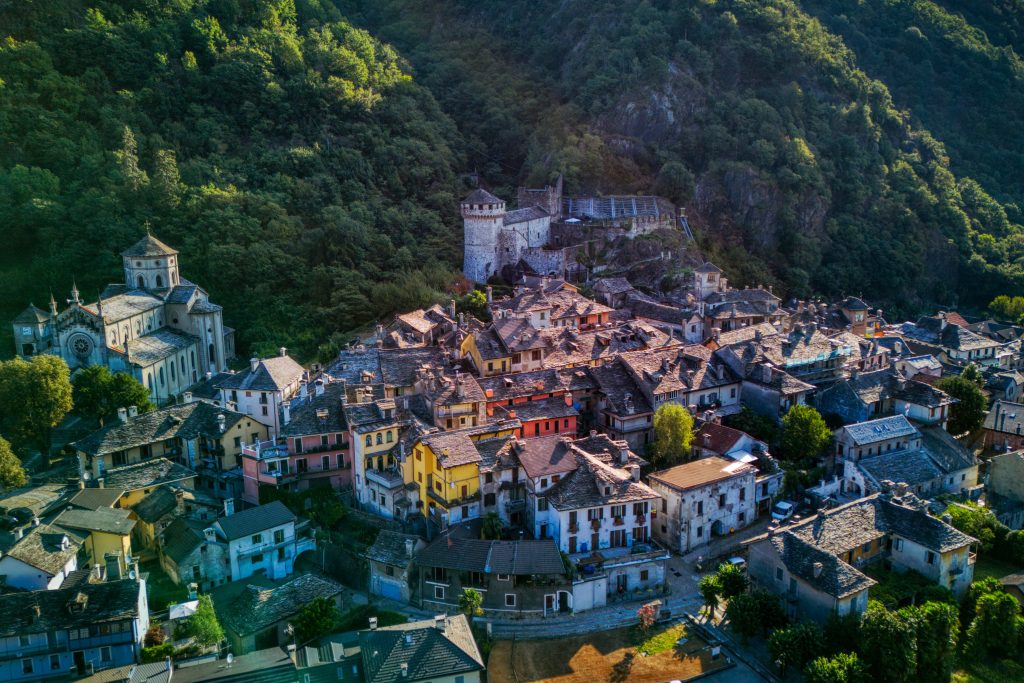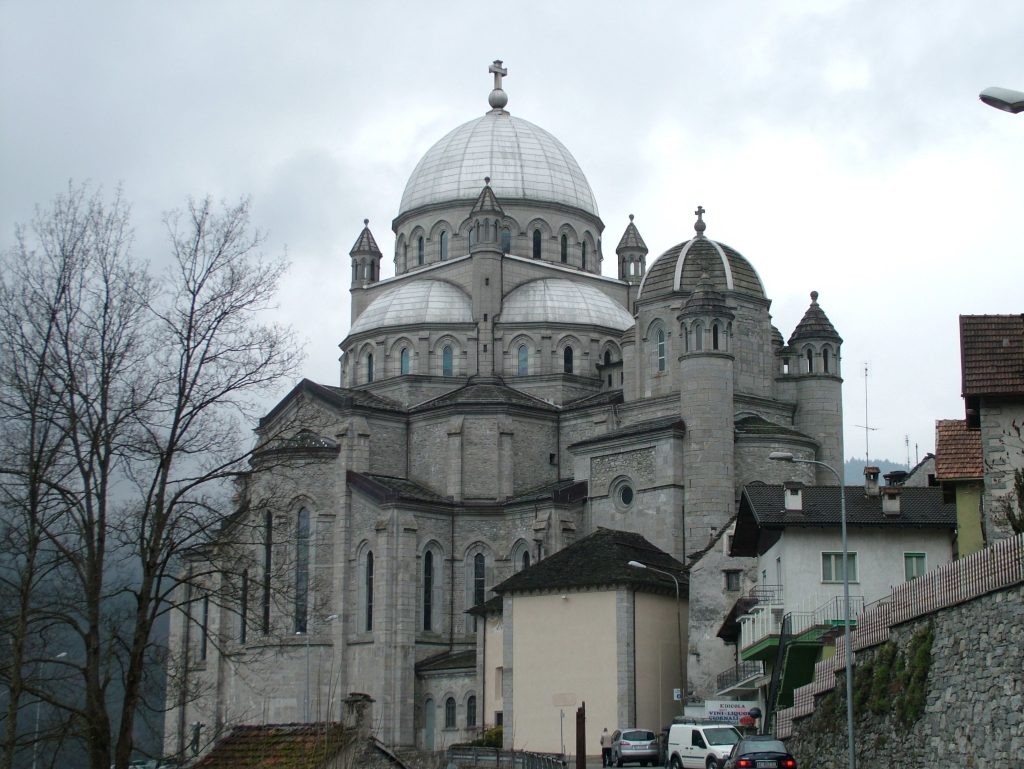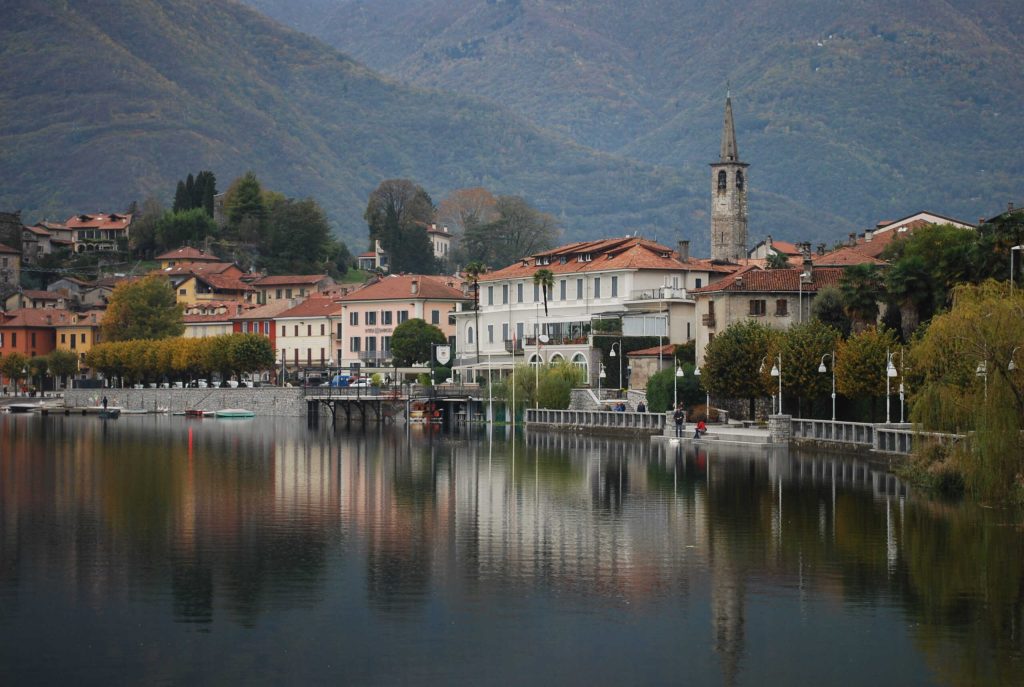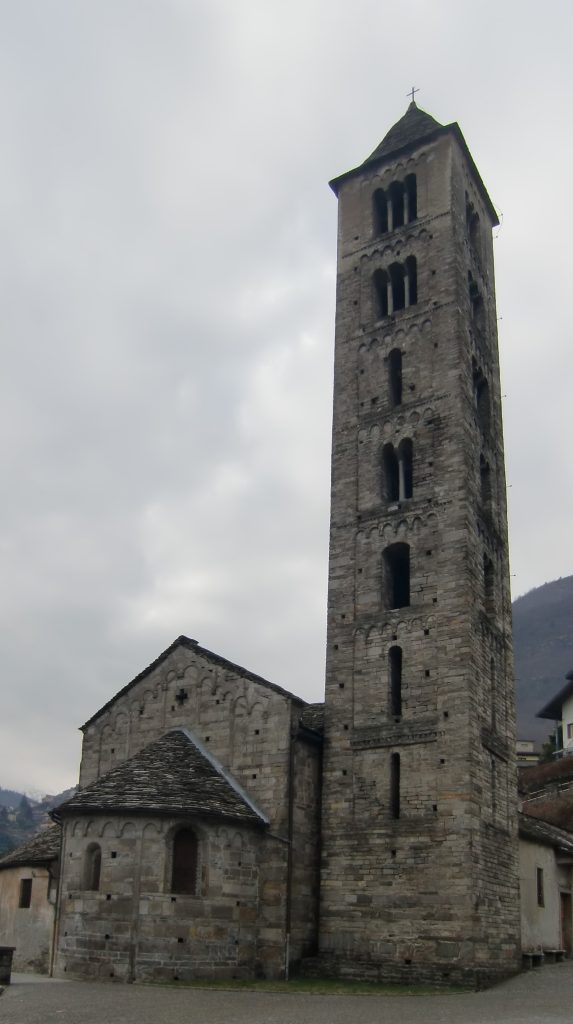
Crevoladossola is home to one of the churches richest in history and art in the whole of the Val d’Ossola: the parish church of Saints Peter and Paul.
From a single nave to a monumental building
The church was originally built in 1331 as a single-nave building, corresponding to today’s central nave. Between 1516 and 1569, it underwent extensive transformation, with the addition of a retaining wall on the southern side and new perimeter walls; serizzo columns were placed along the side walls to support the roof. The expansion from one to three naves was promoted in the early sixteenth century under the patronage of the Della Silva family, the same family that commissioned the present presbytery in 1500, designed by the architect Ruffiner.
Marble façade and Renaissance stained-glass windows
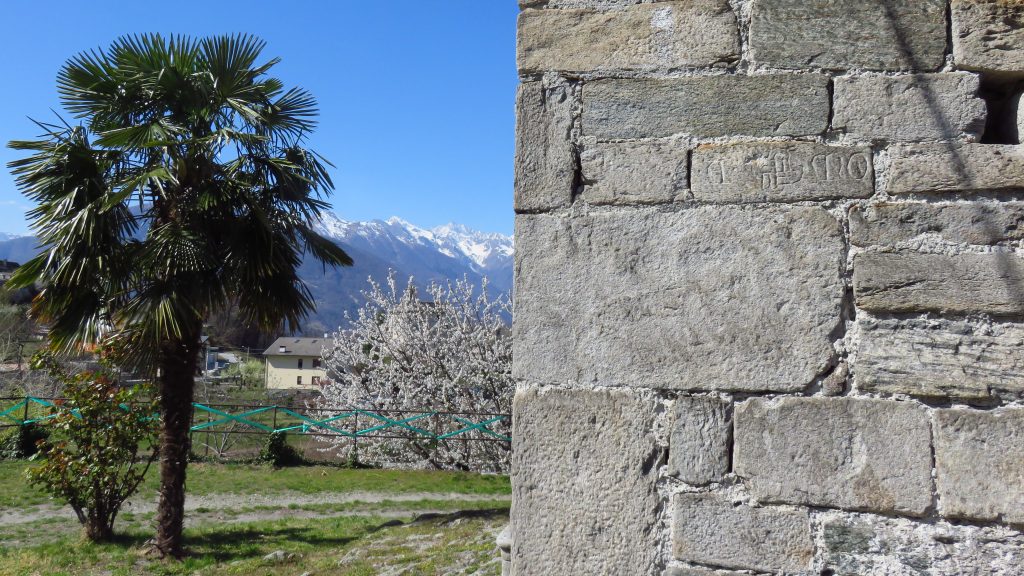
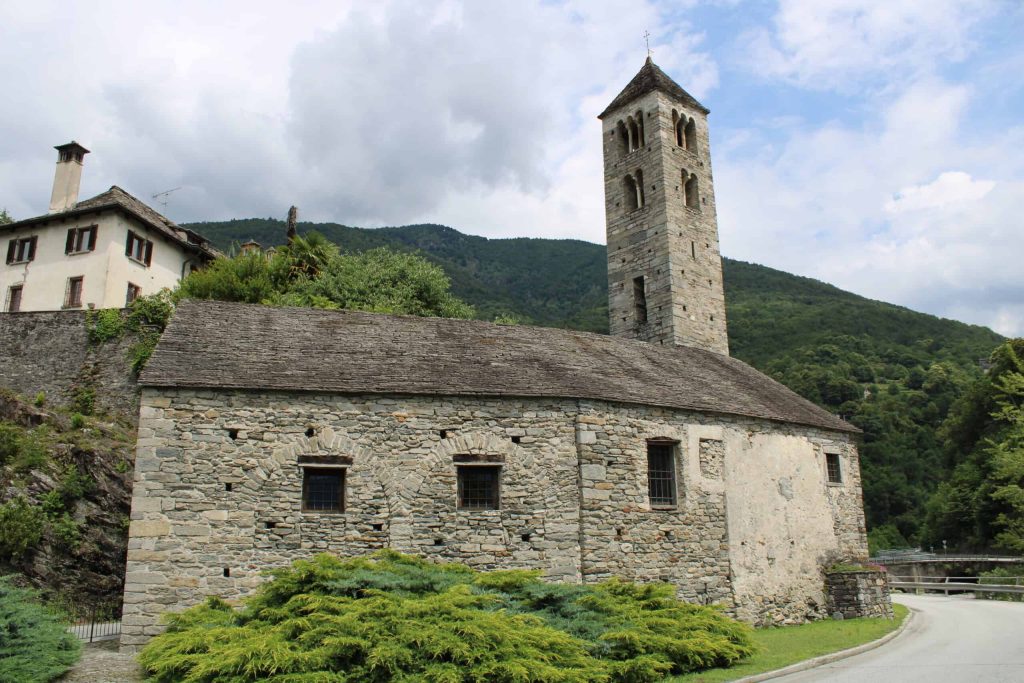
Originally Romanesque in style, still recognisable in the bell tower, the church has a façade made of Crevoladossola marble, enhanced by a rose window and Renaissance friezes and bas-reliefs. Inside are fine stained-glass windows of Northern European school depicting the military leader Paolo I Della Silva and his wife Andreina da Baceno, as well as the Late Gothic presbytery signed by Ruffiner.
The Museum of Sacred Art
Next to the church, in the former parish house, is the Crevoladossola Museum of Sacred Art, which recounts the historical and artistic evolution of sacred architecture in the Ossola area.
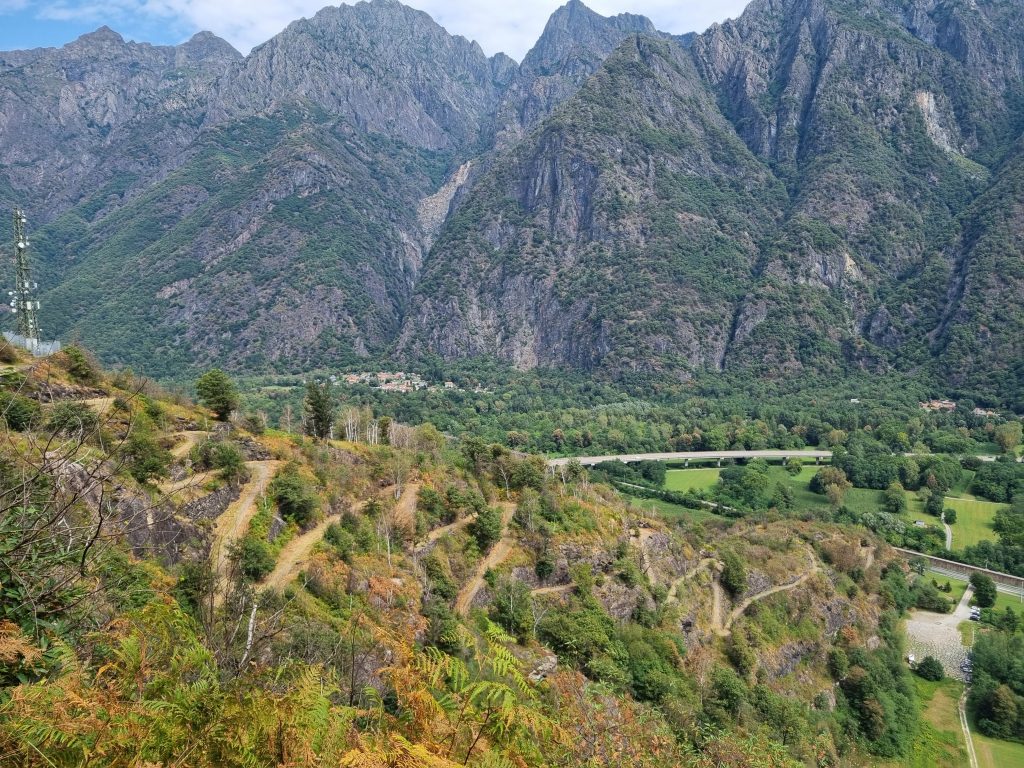
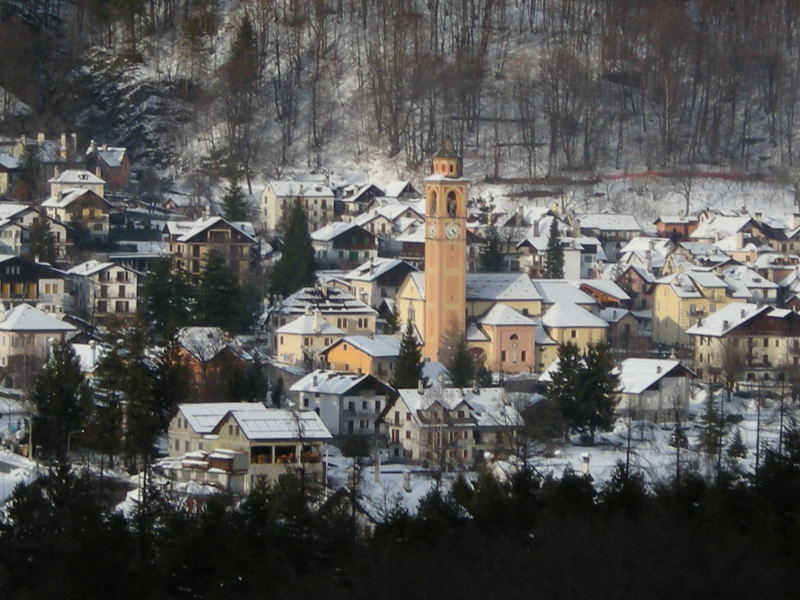
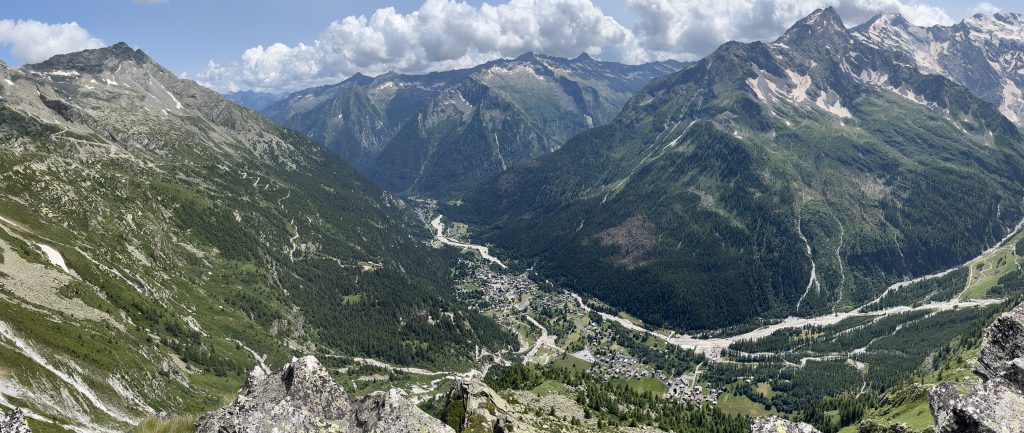
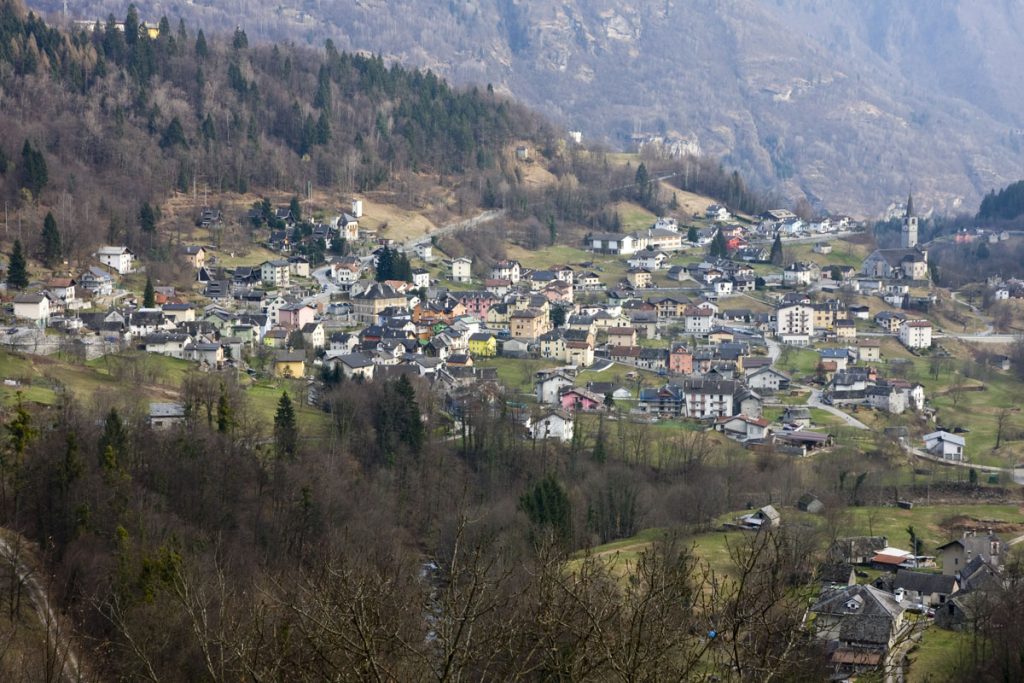
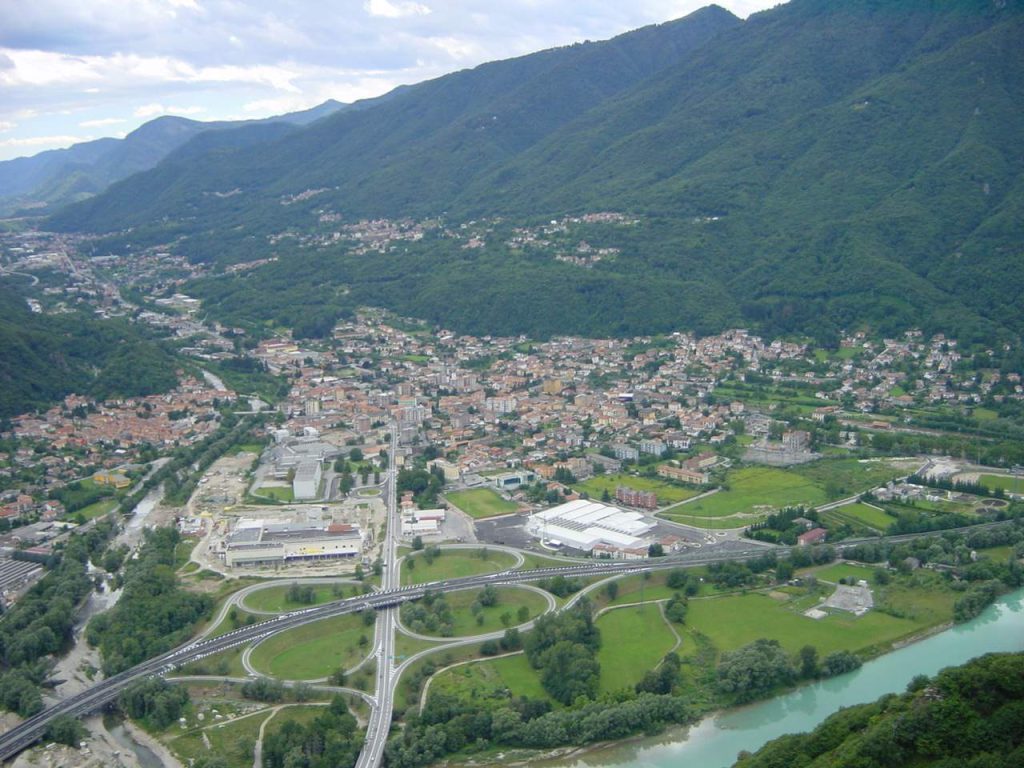
Crevoladossola on the valley floor
The municipality lies along the valley floor, not far from Montecrestese and Premosello-Chiovenda. To explore the church’s history and artworks in greater depth, refer to the visitOssola information page.
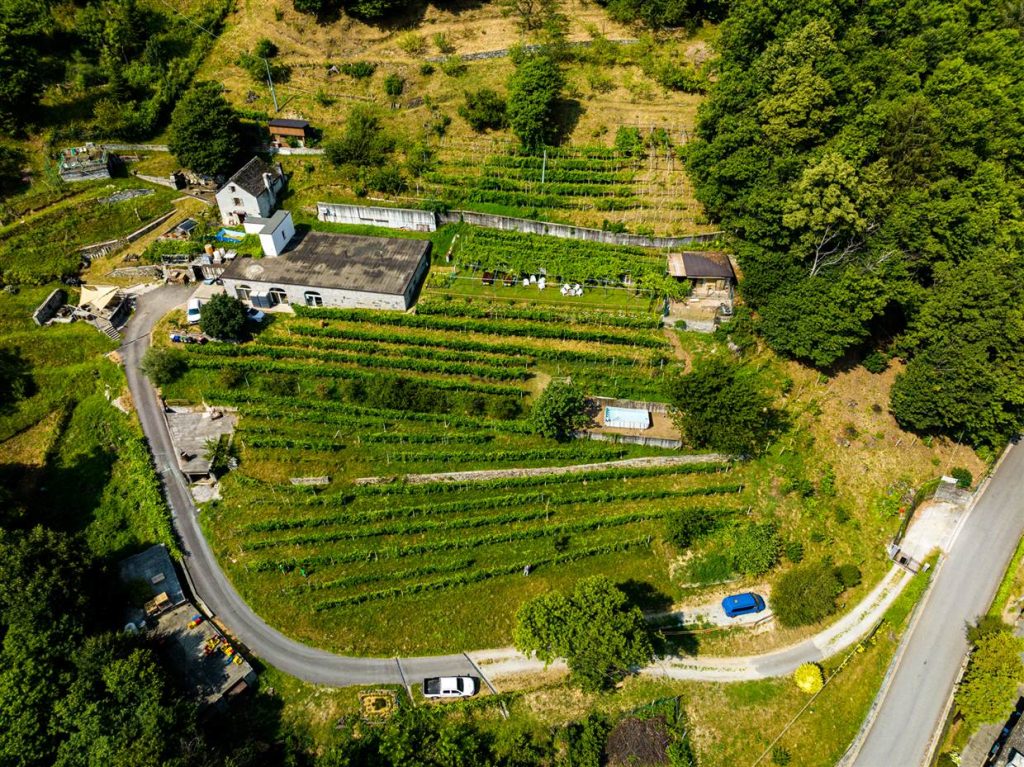
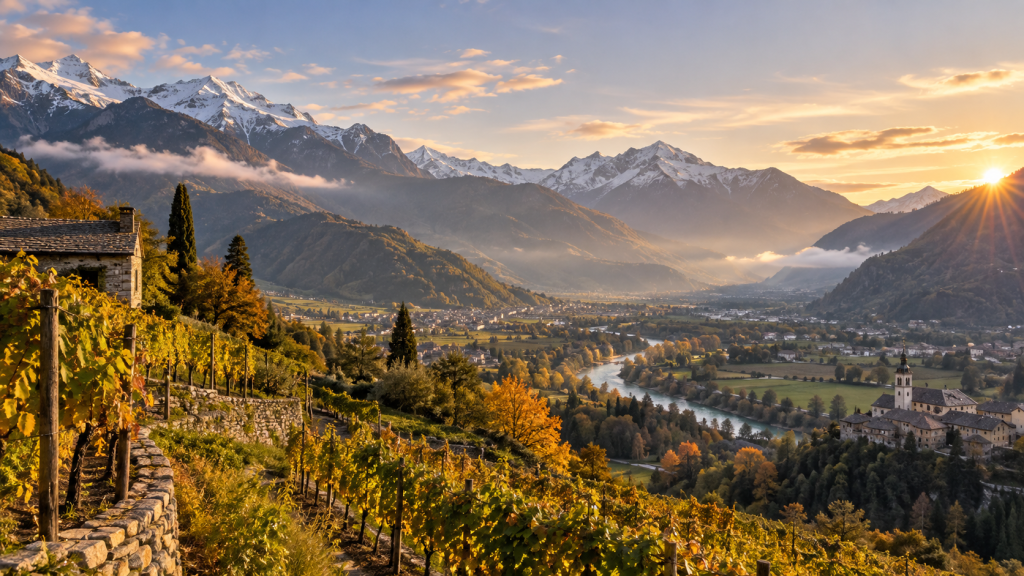
After your visit, the vineyards of the Val d’Ossola are just a short distance away: an opportunity for a wine tasting amid art and wine.
A village between faith and local marble
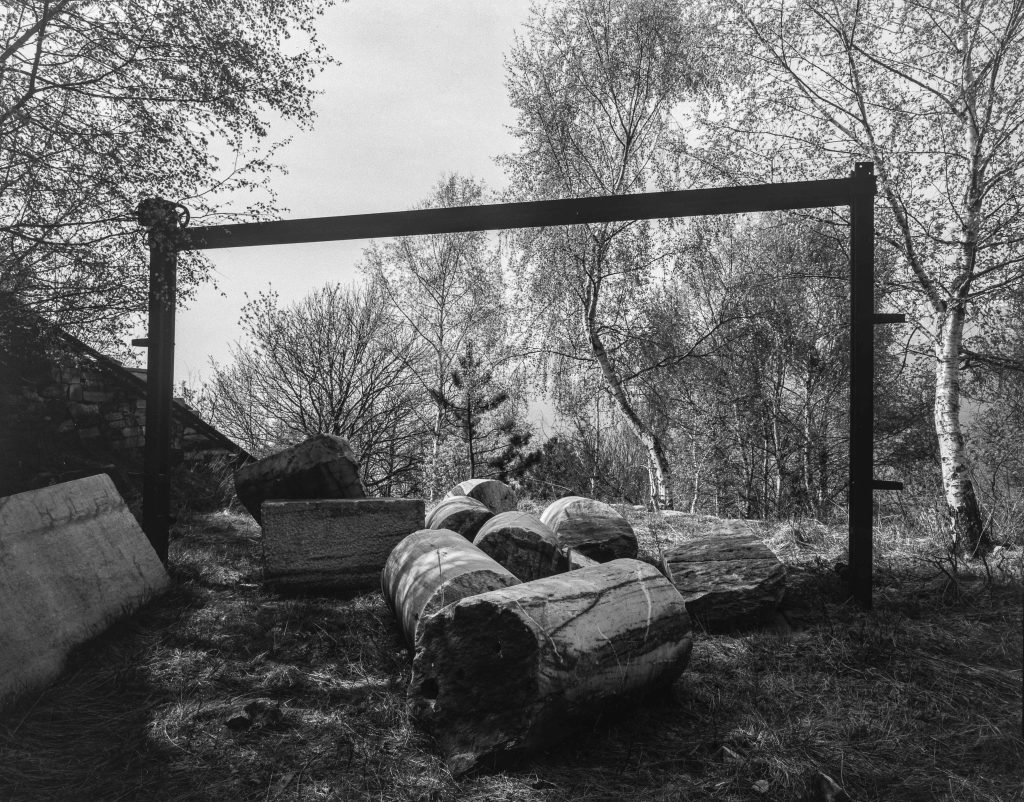
Beyond its celebrated parish church, Crevoladossola retains an urban fabric that bears witness to the long tradition of working local marble, a material that has helped decorate not only the façade of the town church but also numerous religious and civic buildings throughout the Val d’Ossola.
A lively centre all year round
Crevoladossola does not live on its historical heritage alone: today, the village is an active centre on the Ossola valley floor, with commercial and social life developing around the parish church and the main streets, while retaining its connection to its oldest identity, visible on every corner of the historic centre.
A museum that completes the visit
The Museum of Sacred Art next to the church offers a deeper insight into the building’s historical and artistic context, providing more curious visitors with a complete itinerary that goes beyond simply visiting the parish church to embrace the entire evolution of Ossola religious art over the centuries.
A village to experience at a leisurely pace
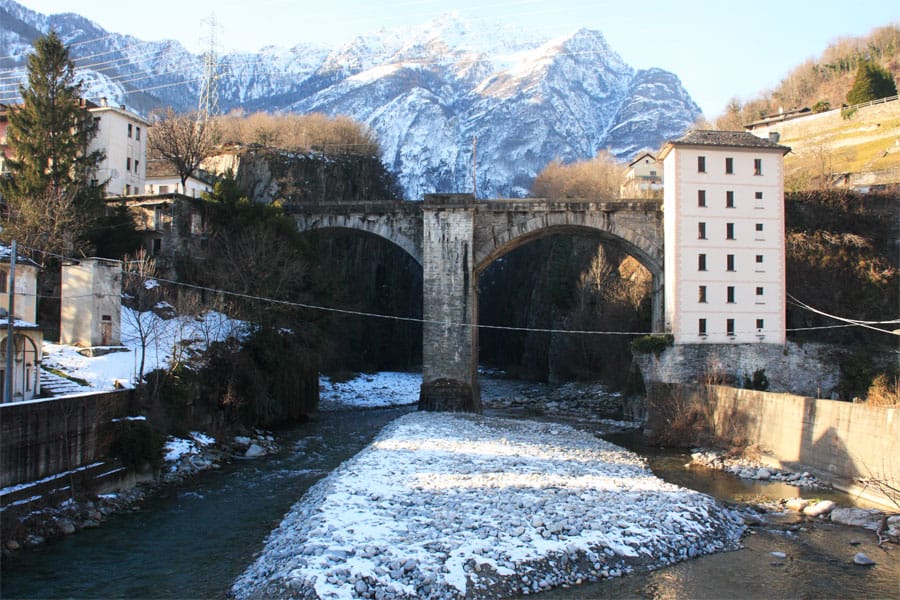
Crevoladossola is well suited to an unhurried visit, perhaps combined with a walk along the River Toce, which crosses the municipal area and offers natural views of great value alongside the historical and artistic heritage of the town.
One final note: the combination of sacred art, local history and river landscape makes Crevoladossola a destination able to satisfy a wide range of interests in a single visit.
Art, history and nature in one small yet great village.
Faith and art, intertwined in a single village on the valley floor.
One final note about Crevoladossola: the dialogue between faith, art and river landscape makes this village a complete stop for those who enjoy discovering the area at a slow pace.
Faith and art, intertwined along the course of the Toce.
Faith and art, intertwined along the River Toce.
Crevoladossola, with its church dedicated to Saints Peter and Paul, forms part of the itinerary of the small towns of Lower Ossola that are worth a stop for those exploring the valley at a leisurely pace, appreciating religious architecture and historic centres less well known to the general public.
The tranquillity of Crevoladossola makes it a pleasant stop for those who prefer a more relaxed pace of visiting than in larger centres.