
The Sacro Monte Calvario of Domodossola is one of the city’s most important sites, recognised as a UNESCO World Heritage Site and, for centuries, a destination for pilgrimage and spiritual reflection.
A hill with an ancient history
Mattarella Hill, on which the Sacro Monte stands, was home to a castle dating back at least to the 10th century, destroyed by the Swiss in 1415. For around two centuries, the hill remained abandoned, until in 1656 two Capuchin friars chose this very place to create a “Processional Way” in honour of the crucifixion of Jesus. Work began the following year, in 1657, with the construction of the first crosses, which would later become proper chapels.
Twelve chapels and the octagonal sanctuary
The project, enthusiastically supported by the Ossola community and approved by the Diocese of Novara, led to the construction of twelve chapels decorated with statues and frescoes, representing the Stations of the Cross, together with three chapels dedicated to the Deposition from the Cross, the Holy Sepulchre and the Resurrection. At the top of the hill stands the octagonal sanctuary of the Holy Cross, whose construction also began in 1657.
Antonio Rosmini and the Institute of Charity
The Sacro Monte Calvario is not merely a place of popular devotion: in 1828, the philosopher and theologian Antonio Rosmini chose this very hill to found the Institute of Charity, the religious congregation still known today as the “Rosminians”. It was here, between 1832 and 1833, that Rosmini completed one of his most celebrated works, “The Five Wounds of the Holy Church”. The bond between the philosopher from Rovereto and this place remains one of the most significant aspects of the Sacro Monte’s history.
An ancient garden between faith and agriculture
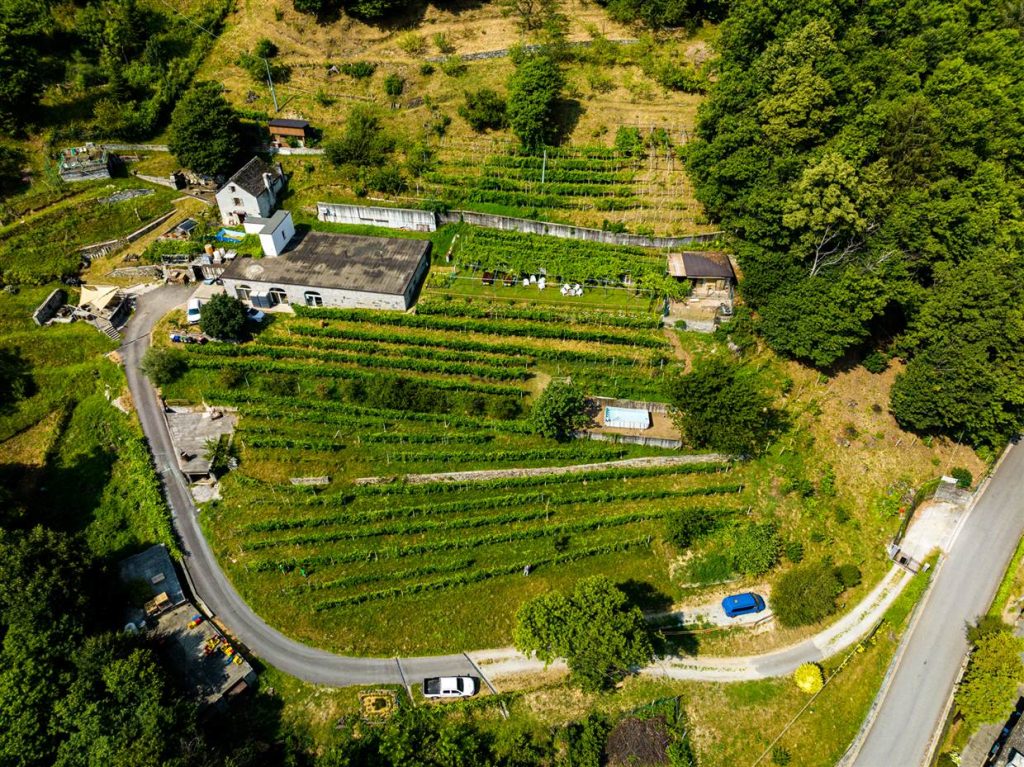
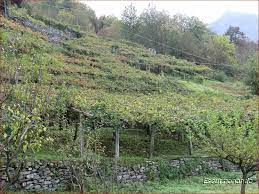
In the past, the hill also contained plots of land, partly cultivated as vineyards and partly intended to adorn the religious residences that stood there: a precious testimony to the agricultural traditions of the time. Even today, there is a small educational garden, used by schools to introduce nursery and primary school children to agriculture, keeping the site’s historic vocation alive.
A World Heritage Site since 2003
Since 2003, the Sacro Monte Calvario of Domodossola has been part of the group of nine pre-Alpine Sacri Monti in Piedmont and Lombardy included on the UNESCO World Heritage List, a recognition certifying its artistic, spiritual and landscape value at an international level.
The Sacro Monte in the heart of Domodossola
The Sacro Monte overlooks Domodossola and can be reached on foot from the historic centre, not far from Piazza Mercato. To find out more about its history and visiting times, refer to the visitOssola page.
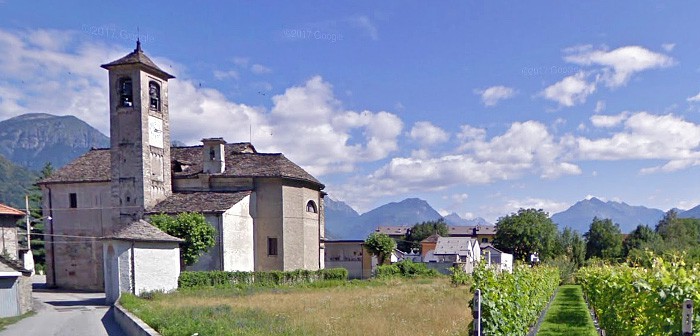
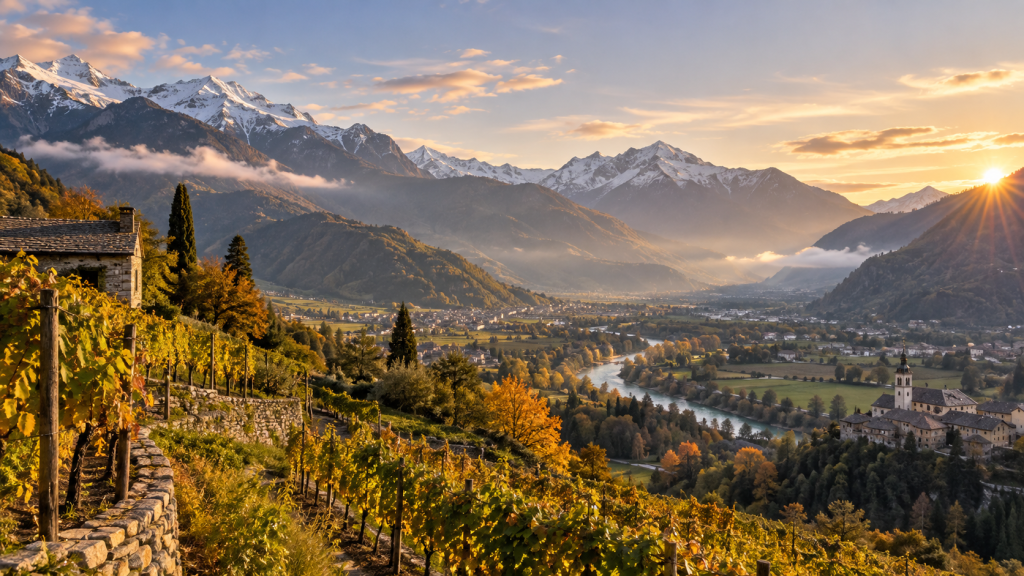
After climbing the Sacro Monte, the vineyards surrounding Domodossola are just a few minutes away: an opportunity for a tasting that brings together spirituality and the local area.
A place that continues to attract visitors
Every year, the Sacro Monte Calvario draws visitors interested in both its religious and historical-artistic aspects, confirming its position as one of the most significant destinations not only in Domodossola but throughout the entire Val d’Ossola, able to speak to different audiences through a single language of art, faith and history.
Ultimately, it is a place capable of speaking both to the heart and the mind of those who visit it.
A spiritual route that continues to evolve
In recent years, the Sacro Monte Calvario has undergone maintenance and enhancement work aimed at preserving its frescoes and architectural structures, often exposed to the elements because of its hillside location. These works, carried out through collaboration between religious bodies and local institutions, ensure that the route through the chapels can continue to be safely enjoyed by future generations of visitors and pilgrims, while preserving the complex’s artistic and spiritual value intact.
A place that, once visited, is difficult to forget.